Scientists agree that our “species” of humans has been walking the earth for at least 100,000 years. And that civilization, as we know it, goes back at least 6 thousand years.
And, not so coincidentally, that’s just about the time of “The Big BANG!”
Of spices that is.
Before that big bang, trees were just trees, bushes just bushes, and no one had any clue, or interest, or knowledge, about just how valuable the bark, leaves, berries, flowers or roots of these plants really were.
Then, for whatever reason, BANG! Humans suddenly discovered their amazing virtues, and we’ve never looked back.
It hasn’t been an easy ride for that pepper to end up in your peppermill.
The spice trade has been part of life, and unfortunately, death.
It’s brought wealth to nations, and it has started wars.
To understand a little bit more about how we got from there to here, below is a snapshot of some of the more important and interesting sign posts along the spice trade path.
Important Dates and Events Along the Spicy Journey to Your Cupboard
When Where What
BC
5000 Middle East Evidence of spices being used. Among the first are cinnamon, cassia, cardamom, ginger, and turmeric.
4000 Asia/Middle East The “Silk Road” becomes the most important trade route in the world, connecting Asia and the Mediterranean spice Meccas.
3000 Egypt Spices used for embalming. Frankincense and myrrh are popular.
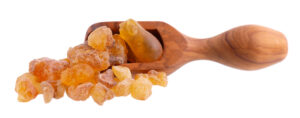
Frankincense resin in olive scoop
2000 Arabia Monopoly of the spice trade for 2000+ years.
1750 Mesopotamia Clay tablets found with recipes using garlic, cumin, and coriander.
1000 Palestine Use of spices in anointing oil and incenses.
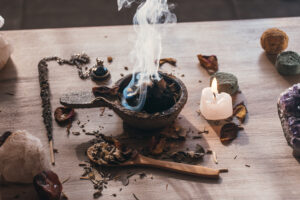
Incense holder with burning charcoal, incense resin, and myrrh
992 Arabia Queen of Sheba brings spices to King Solomon.
500 Greece Importance of spices in diet as a medicine.
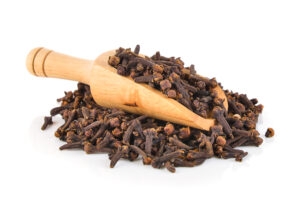
200 China Cloves imported from the Spice Islands.
AD
1st Century Rome Extravagant use of spices and development of sea-trade with India, which lasted 3 centuries.
330 Constantinople Becomes a trading metropolis, Nutmeg and cloves brought to Europe for the first time from Moluccan (Spice) Islands
500 Arabia Controlled spice trade until the Middle Ages.
1100 Europe Crusades stimulated interest in spices.
1200 England Guild of Pepperers established; merged with the Spicers.
1250 Europe Spices regarded as aphrodisiacs.
1300 Italy Marco Polo’s book stimulates interest in Oriental spices.
1350 Europe Spices used as medicines & fumigants during The Black Death.
1350 Italy Venice and Genoa now begin to control the spice trade.
1400 England The Spicers’ Guild becomes the Grocer’s Company.
1450 Turkey Controls spices; forced other sea route discoveries.
1450 Spain Columbus finds spices in the Caribbean islands.
1500 Portugal Controls spice trade after Vasco da Gama sails to India.
1500 England It’s said that dockworkers now paid bonuses in cloves!
1500 Holland The Dutch and English East India Companies come on the scene and compete with Portugal for world spice trade dominance.
1521 Spain Magellan’s expedition circumnavigates the globe.
1525 Italy Venice’s spice wealth helps finance the Renaissance.
1550 England Drake circumnavigates globe; imports spices to England.
1600 Holland Gradually takes the Spice Islands from Portugal in an attempt to monopolize spice trading.
1600 Spain Competes for spice trade.
1650 Holland Controls spice trade from East Indies.
1700 Ceylon Coffee trees planted; later, grown in Brazil.
1700 Europe Coffee, chocolate and tobacco favored over spices.
1750 Holland Destroys spices to try and create price increases.
1800 England Takes over the Spice Islands, briefly.
1800 America Pepper trade with East Indies makes millionaires in Salem, MA.
1850 Europe Spices decrease in significance a sugar becomes favored flavor.
1900 World Dietary fashions change; spices decrease in cost and importance.
Sources: UCLA History & Special Collections Library, CABI Digital Library (The Association of International Research and Development Centers for Agriculture).
Of course, nowadays you don’t have to form an army, or live a privileged life to afford or have your choice of the huge variety of herbs and spices available to you at the Red Goose Spice Company.
You don’t even have to own a ship; we’ll ship them to you!
Even Chefs get stuck in a seasoning rut once in a while.
We tend to fall in love with OUR favorite recipes.
The tried-and-true favorites we often call them.
And while our favorite recipes are great…you can’t go back to that well too many times without eventually creating a “stale” menu.
Even without realizing it.
The phrase “variety is the spice of life,” has never rang truer than when it comes to deciding what should be on your future menus, and when to consider “retiring” some “old favorites” to make room for some NEW favorites in 2023.
Yes, there will always be a few customers that will perhaps lament about losing a dish that they love, but consider the fact that they may also be one of the many customers that are desperately trying to get out of their time-share resorts.
First experiences can be magical, and for a while it’s THE “thing.” But sometimes, the magic just wears off.
People, whether they admit it or not, do like some variety.
With that said, we’d like to give you some “spicy” options that you may never have tried, to head you on a new course this year.
Five seasoning blends that just might change the way you cook in 2023.
Not surprisingly, most of these blends are from the ancient HOME of spice blends, namely the Middle East.
Even if your customers aren’t necessarily big into traditional Middle Eastern fare, don’t let that deter you. Most all of the spices that make up these blends are ones that your customers are VERY familiar with, including savory spices like cumin, coriander, paprika, fennel, and marjoram as well as sweet spices like cinnamon, ginger, and cardamom.
Adding a bit of these unique spice blends to your current or future recipes can add an enormous range of interesting flavors in your culinary arsenal this year.
Most commonly found in the cuisine of Tunisia, Algeria, and Morocco.
Kasbah of the Udayas in Rabat, the capital of Morocco
Ras el Hanout translates from Arabic into English as “head of the house.” Meaning it’s the best and highest quality blend a seller has to offer.
Similar to curry powder, the recipe of herbs and spices that make Ras el Hanout, as well as their ratio to one another, can vary from shop to shop. You can however, expect to see the “usual suspects” such as: cardamom, black pepper, cumin, ginger, allspice, cinnamon, nutmeg, clove, chili peppers, coriander, fenugreek, paprika, turmeric, and coriander seed to be in most all of the blends.
Safe to say, that unless you go to the trouble of making your own blend “in-house,” it’s best to find one to buy that you like and stick with it. Especially when you consider that many traditional recipes use more than 4 dozen herbs and spices in their recipes!
Of course, as you might expect, Red Goose has created a traditional blend what we think you will thoroughly enjoy.
Ras el Hanout is pretty much a 50/50 sweet and savory spice blend with a mild amount of heat, if any at all. Its complex flavor is typically used as a meat or a fish rub in specialty dishes.
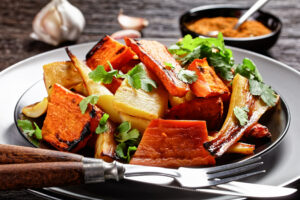
Moroccan roasted root vegetables: parsnip and carrot with Ras el Hanout .
It’s also added to pasta or rice as a flavoring, and stews and meat casseroles cooked in a tagine.
The main ingredient in Harissa is chiles, so it’s no wonder that this North African spice blend was created by this region after chiles were introduced there in the 14thcentury by spice traders.
Spicy hot, is probably the best way to describe Harissa.
You’ll often find it used as a condiment when it is pureed with olive oil and/or water. Considering its name derives from the Arabic term meaning “to crush, grind, or puree,” it’s quite often how this spice blend is used, as it creates a condiment similar to sriracha and Tabasco sauce.
The dry Harissa blend is also used as a meat rub (especially kabobs), and as a flavoring in stews, soups, vegetables, and rice dishes.
Its flavor is considered to be spicy, peppery and a bit smoky and its typical ingredients include more savory than sweet spices which include: chili peppers, coriander, paprika, red pepper, dehydrated garlic, salt, cinnamon, caraway and ginger.
Biryani spice is named after the rice dish called biryani, developed by the Muslims of South Asia. This dish eventually spread throughout India, Thailand, and Malaysia.
Similar to how curry powder came into being, the blend, represented the usual combination of individual herbs and spices used to make Biryani, and if you buy the blend, it makes the final preparation much easier.
While the ingredients and their proportions vary from region to region, the most common ones are: fennel seeds, cumin, turmeric, nutmeg, black pepper, cloves, cardamom, cinnamon, bay leaves, coriander, mint, ginger, dried onions, green chiles, star anise, allspice, and garlic.
As is true with curry powder, once again there are many spice blend recipes for Biryani, and they all differ according to their region and all with different pre-fix names as a result.
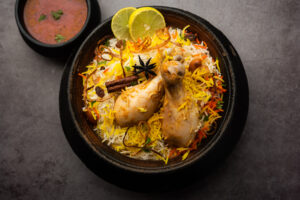
Indian Chicken Biryani served in a terracotta bowl with yogurt over white background. selective focus
For example:
Sindhi biryani, which is popular in Pakistan.
Hyderabadi biryani: This biryani is one of India’s most popular types of biryani.
Malabar biriyani: From the Indian state of Kerala.
Calcutta/Kolkata biryani, likewise from Calcutta
Ambur biryani: From the leather-tanning city in Tamil Nadu
Lucknowi biryani: Based on the Persian cooking style.
Mughlai biryani: With cheese curd, chicken, almond paste, ghee, dry fruits, and green chilies.
More savory spiced than sweet spiced, Zahtar or Za’atar Seasoning (not to be confused with the herb za’atar, a wild, mint-related herb similar to oregano and marjoram), is a mainstay seasoning blend popular all over the Middle East.
Once again, and forgive me if you’ve heard this story before, its recipe varies from region to region adding or subtracting various herbs as spices to satisfy the tastes and traditions of the locals.
While the original recipe does call for the use of the za’atar herb, its not easy to find. So more often than not, the recipes use thyme, oregano, or marjoram as a substitute.
The other key components in Zahtar are sesame seeds and sumac while still others add: dill, savory, cumin, fennel, coriander, orange peel, caraway seed, cinnamon, allspice, hyssop, and even rose buds!
Being a more “savory” flavored seasoning, Zahtar can be used in so many ways, such as: a meat rub, in hummus, as a topping on crusted breads, and even in salads and salad dressings.
It is however, recommended that if using Zahtar seasoning in a cold dish recipe, that it first be “bloomed” by adding it to a heated oil to help release its full flavor potential before then adding it to the recipe.
Translated to “pepper” or “hot,” you’ll love this 5th century Ethiopian spice blend used in its national dish Doro Wat, which is a spicy chicken stew, or, perhaps mixed with oil, mead, or red wine to make a condiment called awaze.
Made from key ingredients such as: red chili peppers, fenugreek, ginger, coriander, cardamom, allspice, cumin, peppercorns, cloves, cinnamon, and some lesser-known spices grown in that region such as korarima, ajwain, and long pepper, its complex flavor is known as slightly spicy with warm notes of citrus.
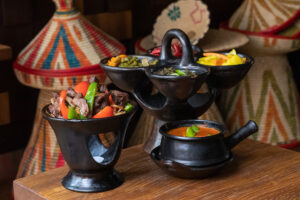
The Ethiopian traditional, delicious Derek tibs meat dish
Berbere is also used as a meat rub, in braised casserole dishes, and when used as awaze, as a dipping condiment for breads.
Of course, ALL of these seasoning blends are readily available at the Red Good Spice Company and we hope that you’ll take the opportunity to try one or all of these amazing seasoning blends as you create some of your NEW favorite dishes of 2023!